
Power of Sleep: Unlocking Brain Health Benefits
Sleep – the Best Brain Boost We’re Not Prioritising
Let’s be honest – how often do you actually get a good night’s sleep? In a world fuelled by deadlines, distractions, and late-night scrolling, sleep is often the first thing we sacrifice. Yet science is making one thing crystal clear: when we skip sleep, we short-change our brain. Prioritising sleep and brain health is becoming more essential than ever. In the last several years, researchers have made exciting discoveries about sleep and brain health, showing just how connected the two really are. That’s why understanding the power of sleep has never been more important.
Sleep isn’t just a passive “off switch” for our bodies. According to circadian neuroscientist Professor Russell Foster, sleep is a critical function that helps us consolidate memories, clear out brain toxins, regulate emotions, and support overall cognitive performance. In fact, recent studies have shown that during deep sleep, the brain activates a kind of “cleaning system” known as the glymphatic system, which clears waste and supports long-term brain health.
So if you’ve ever felt foggy, emotionally flat, or unusually forgetful after a poor night’s sleep – it’s not in your head. Or rather, it is in your head… literally.
In this article, we’ll explore what the science says about why sleep is so vital to brain health – and how you can start making it work for you.
Read on to unlock the magic of sleep and brain health, and discover why quality sleep is the unsung hero of mental clarity, memory, and mood.
So, what do we know for sure about sleep and our wellbeing?
While scientists like Russell Foster continue to uncover the many mysteries of sleep, one thing is undeniable: sleep is a powerful, non-negotiable pillar of brain and body health. Over the past decade, research has shown that poor sleep isn’t just about feeling tired – it increases the risk of infections, accelerates the progression of serious diseases like cancer and cardiovascular conditions, and significantly raises the likelihood of experiencing depression.
But how exactly does sleep impact our brain? And what’s going on in our heads while we snooze?
Let’s dive into five fascinating ways that sleep directly supports your brain health – and why prioritising rest might just be the smartest health investment you’ll ever make. 💤
5 Surprising Brain Health Benefits of Sleep
We spend nearly a third of our lives asleep – but that time is far from wasted. Behind the scenes, your brain is busy performing essential maintenance that keeps you sharp, emotionally balanced, and physically well. Here’s what happens when you get a good night’s sleep – and what you risk when you don’t.
1. 🧠 Sleep Boosts Memory Consolidation
Think of sleep as your brain’s “save” button.
One of the most well-established benefits of sleep is its role in consolidating long-term memory. During certain sleep stages, particularly deep sleep and REM (rapid eye movement) sleep, your brain strengthens important neural pathways while pruning away irrelevant ones. This fine-tuning process helps you retain what really matters – whether it’s a new work skill, a meaningful life lesson, or the plot of that novel you just finished.
According to a study published in Nature Reviews Neuroscience, sleep not only stabilises memory but actually enhances learning potential for the next day.
2. 🧼 Sleep Clears Brain Toxins—Including Those Linked to Alzheimer’s
Your brain has its own built-in cleaning crew – and it only clocks in while you’re asleep.
Research from the University of Rochester Medical Centre uncovered the “glymphatic system,” a kind of waste-clearing pathway that becomes up to 60% more active during sleep. This system flushes out harmful toxins, including beta-amyloid, a protein linked to Alzheimer’s disease.
Translation: sleep helps your brain detox. Literally.
3. 🎨 Sleep Fuels Creative Thinking
Feel stuck in a mental rut? Sleep on it.
Creativity isn’t just about inspiration – it’s about incubation. Studies have shown that sleep, especially REM sleep, enhances divergent thinking (the kind of thinking that helps you generate fresh, out-of-the-box ideas).
In fact, research published in the journal Sleep found that participants were twice as likely to find creative solutions to problems after a full night’s sleep compared to those who stayed awake.
So the next time you hit a creative wall, try trading your brainstorming session for a nap.
4. 🌧️ Poor Sleep and Depression Are Closely Linked
We often talk about how poor mental health can lead to bad sleep – but the reverse is just as true.
A 2014 meta-analysis published in Sleep found that people who consistently sleep fewer than 6 hours—or more than 8 – are significantly more likely to experience symptoms of depression.
This bidirectional relationship suggests that improving sleep quality can be a powerful tool in managing mental health. Prioritising rest is not indulgent – it’s essential for emotional resilience.
5. 👶 Children’s Sleep Affects Brain Development
Sleep is even more critical during childhood, when the brain is rapidly growing and forming lifelong cognitive foundations.
Research from McGill University found that just 18 more minutes of sleep per night in school-age children correlated with better academic performance – especially in subjects like math and English. In the long term, chronic sleep deprivation in kids has been linked to issues with attention, behaviour, and even structural brain development.
It’s not just about earlier bedtimes – it’s about setting children up for lifelong success
Take a deep dive into the neuroscience of sleep
If you really want to fully geek out on the neuroscience of everything sleep, here you go!
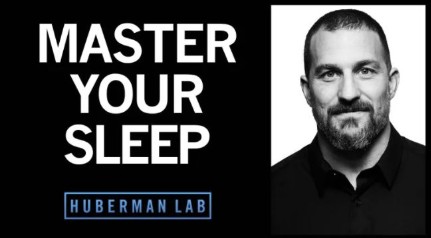
Check out Dr Andrew Huberman’s podcast episode: ‘Master Your Sleep & Be More Alert When Awake’
Final Thoughts: Prioritise Sleep, Protect Your Brain
In our always-on world, sleep is often the first thing we sacrifice. But as the science clearly shows, it should be one of the last.
Prioritising quality sleep isn’t just about feeling rested – it’s about giving your brain the best chance to thrive. From memory and creativity to emotional resilience and long-term cognitive health, sleep is your secret superpower.
So, if you’re serious about improving your wellbeing, enhancing performance, and protecting your mental health, start by protecting your sleep.
Take the Next Step Toward Mental Fitness
At Get Mentally Fit, we understand the powerful connection between sleep, brain health, and sustainable performance. That’s why we offer tailored support to help individuals and teams develop stronger mental habits and routines.
Whether you’re looking to improve your own mental fitness or support your team, we’re here to help.
📩 Get in Touch in touch to explore how we can support your mental fitness goals.
📖 Learn more about our Resilience Test or Leadership Coaching, facilitated by our Principal Psychologist Emily Johnson.
🚀 Or dive into our Staff Training solutions and start building a mentally resilient, high-performing culture.
Let’s unlock your potential—one good night’s sleep at a time.
You Might Also Like:
More articles